Home › Tree Services › Tree Cabling & Bracing
Tree Cabling & Bracing in Essex & Morris County, NJ
Structural support systems that hold weak unions, split leaders and heavy limbs together — a smart, ISA-standard alternative to removing the mature trees Essex & Morris County homeowners have loved for decades.
T&D Tree Service is a family-owned, ISA Certified arborist company in Livingston, New Jersey, installing tree cabling and bracing systems throughout Essex County and Morris County since 1984. Not every structurally weak tree needs to come down. When a beloved oak, maple or beech develops a codominant stem, included bark, a split leader or a long horizontal limb reaching over your roof, a properly engineered support system can reduce the risk of failure and buy that tree many more safe years.
Cabling and bracing is preservation work — it belongs to the same toolkit as structural pruning and plant health care, and it should always follow a professional tree risk assessment. Every system we install is designed and rated to ANSI A300 (Part 3) and ISA best-management-practice standards, using hardware sized to the tree and the loads it carries. We’re licensed and insured and fully insured.
Engineered support, not guesswork
Dynamic and static cabling, through-rod bracing and canopy hardware — each sized and rated to the tree by a certified arborist.
Dynamic (Cobra) Cabling
Flexible, synthetic rope systems installed high in the canopy that let the tree move and build reaction wood while limiting the worst-case load on a weak union.
Static Steel Cabling
Extra-high-strength steel cable and rated hardware for heavier limbs and rigid support — the traditional through-canopy system, sized to the tree.
Through-Rods & Bracing
Threaded steel rods installed across a splitting fork or crack to bolt the union together, often paired with a cable above for belt-and-suspenders support.
Codominant & Weak Unions
Assessment and support of V-shaped, same-diameter stems and included-bark forks — the failure points that drop half a tree in a storm.
Heavy-Limb Support
Cabling long horizontal or overextended limbs that reach over homes, driveways and play areas so they don’t tear out at the trunk.
Inspection & Retensioning
Annual checks of existing cables and hardware — we inspect, retension and replace aging systems other companies installed and forgot.
A preservation alternative to removal
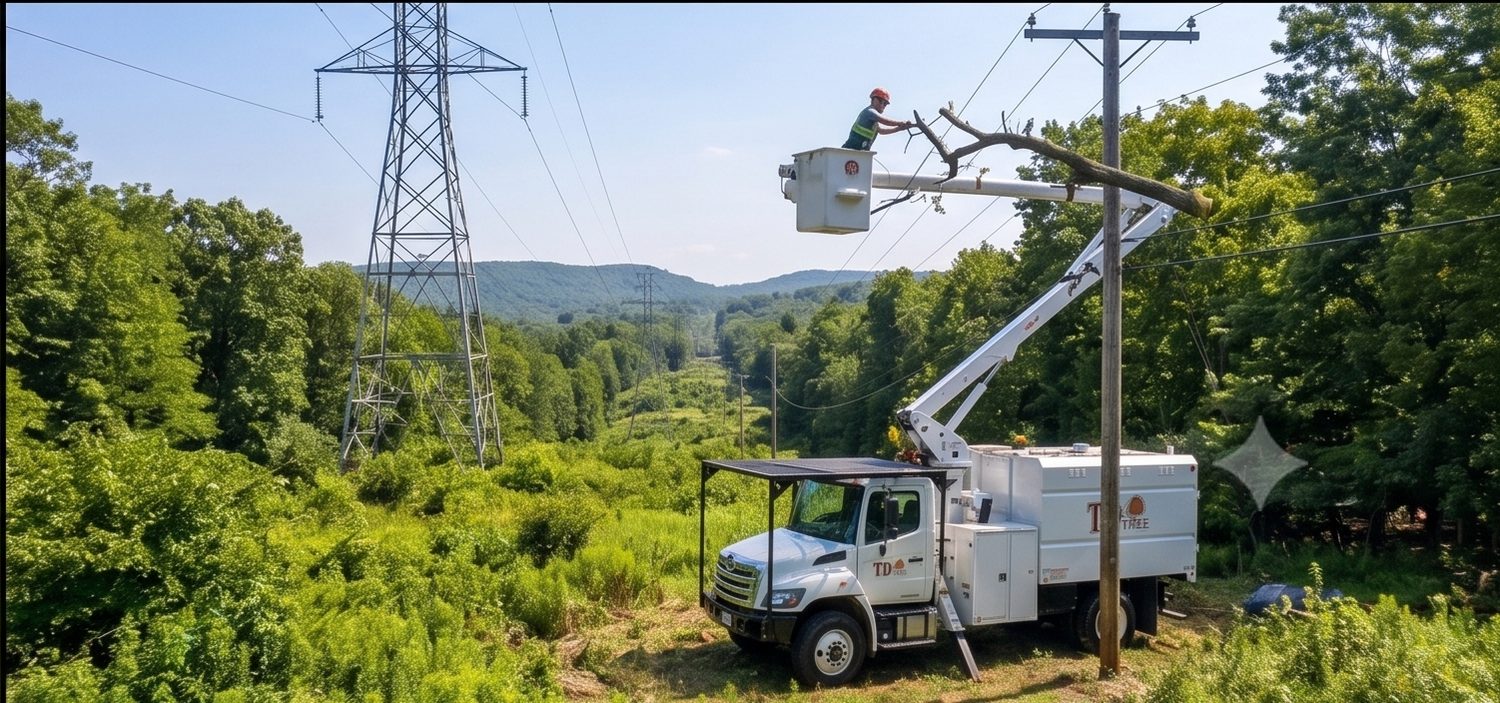
A large, healthy tree with one structural flaw is worth saving. Removing and replacing a mature shade tree costs far more than a support system, and it takes decades to grow back the canopy, the curb appeal and the cooling shade you lose. Cabling and bracing lets us treat the weakness instead of sacrificing the whole tree.
- Reduces the load on codominant stems, split forks and included-bark unions
- Supports long, heavy limbs reaching over roofs, driveways and patios
- Preserves mature, landmark and specimen trees — and their property value
- Often paired with reduction pruning to lighten the load at the source
- Installed to ANSI A300 and ISA standards by fully insured, certified arborists
When a tree needs cabling or bracing
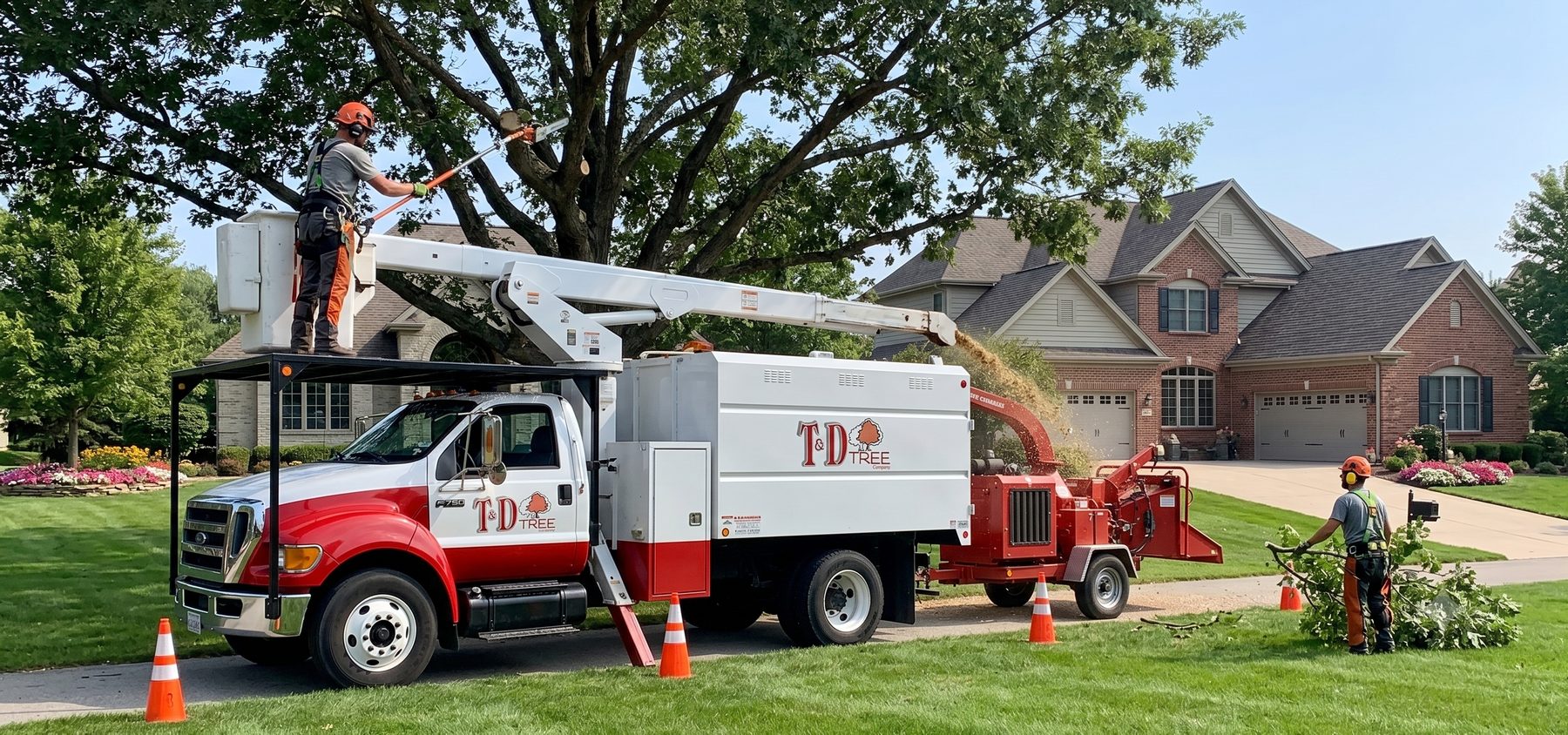
Structural defects are easy to miss until a storm exposes them. Call for an assessment when you notice a tree that:
- Splits into two or more trunks of similar size from a tight, V-shaped union
- Shows included bark — bark pinched down inside the fork instead of a solid, rounded branch collar
- Has a visible crack, seam or gap opening at a major fork or crotch
- Carries a long, heavy horizontal limb that sags or reaches out over your home
- Already lost a leader or large limb, leaving the rest of the canopy unbalanced
- Is a mature specimen you want to keep, but a company has recommended full removal
Before we recommend hardware, we look at the whole tree — and when the defect is too far gone, we’ll tell you honestly and discuss removal instead. A documented arborist report can back up the plan for insurers or an HOA.
Assess, engineer, install, maintain
Support systems are only as good as the assessment behind them — so ours start with a certified arborist.
Arborist Inspection
Dave or a certified arborist climbs or inspects the tree, identifies the weak unions and decides whether cabling, bracing, pruning — or removal — is the right call.
Design to ANSI A300
We design the system: dynamic or static, cable placement, hardware size and rating, all matched to the tree’s loads and species.
Professional Installation
Our climbers install rated hardware at the correct height and tension — two-thirds of the way up from the union for optimal support.
Document & Re-Inspect
We record the system and set an inspection schedule, then check, retension and maintain it so it protects your tree for years.
Cabling often pairs with reduction pruning and a documented arborist report. We serve every town in Essex & Morris County, including all of Essex and Morris.
Cabling built for New Jersey’s mature canopy
Essex and Morris County are full of the big, old shade trees that make towns like Short Hills, Montclair, Llewellyn Park and Mendham so green — and many of them were never structurally pruned when they were young. Decades later they carry heavy, codominant leaders and sprawling limbs that our wet Nor’easters, summer microbursts and heavy wet snow load to the breaking point. A support system installed before the storm is far cheaper than the crane, the roof repair and the insurance claim after one.
New Jersey’s freeze-thaw winters and saturated clay soils also work against weak unions year-round, slowly prying included-bark forks apart. We install dynamic Cobra systems high in the canopy where they belong, or rated steel and through-rods where a rigid hold is called for, then note the system so it can be re-inspected on schedule. From a single landmark oak on an estate to the street trees shading a whole Livingston block, we size every system to the tree in front of us — never a one-size cable kit off a truck.
What affects tree cabling & bracing cost in NJ
We quote every support system on-site after inspecting the tree, because the right hardware depends entirely on the defect. The main factors are:
- System type — a single dynamic Cobra cable versus multiple steel cables plus through-rods
- Tree size & height — taller canopies mean more climbing time and longer, higher-rated cable runs
- Number of unions — one weak fork versus several leaders that each need support
- Bracing hardware — whether threaded rods are needed to bolt a splitting crotch together
- Companion pruning — reduction pruning to lighten the limb is often the smartest first step
- Access & rigging — open yard versus tight quarters over a house, pool or fence line
Because cabling preserves a tree that might otherwise be removed, it’s almost always the more economical choice over its lifetime. Meet the team, read our reviews, or book a free estimate.
Caring for the trees of Essex & Morris County
From the estates of Short Hills and Mendham to every street in between, T&D Tree Service is the local, licensed arborist New Jersey homeowners call first.
Essex County
What Essex & Morris County says about T&D Tree
This service is THE BEST! A huge tree came down on my shed and they came out same-day. The crew worked hard to save the shed and removed the heavy limbs very carefully. Cleaned up nicely — excellent service.
I have been using T&D for years. There is no reason to use anyone else. They are reliable, competent and fairly priced. Thank you Dave.
Best tree services in Essex and Morris counties. Dave came for a prompt estimate, pulled the permit quickly, and his crew did a great job above our expectations — covered the siding and pathway to avoid damage.
I’ve used T&D multiple times and they never disappoint. Professional, friendly, efficient. They leave the area spotless — it’s clear they take pride in their work. Highly recommend!
T&D was wonderful — always on time, always when promised. David showed a vast knowledge of local trees, his team used a crane and wore safety equipment, and they cleaned up completely.
They do exceptional work at extremely reasonable prices. Dave was an absolute pleasure to work with. The tree was a monster and came down seamlessly — they truly go above and beyond.
Dave arrived on time with a reasonable quote, and the crew showed up the very morning he promised. Courteous, efficient and professional — they protected our property and cleaned up well.
Massive 50-ft tree removed at the last minute, leaving no trace on my neighbor’s yard. Amazing work for just 3 guys. Fair pricing and easy to work with.
Responsive, dependable, and his team is neat and very careful. I’ve used T&D in the past and would not do business with any other tree company in Livingston.
Very reasonable pricing. Great service. Crew arrived at the time promised. Yard was left spotless.
Cabling & bracing questions, answered
Cabling installs flexible or steel cables high in the canopy to limit how far weak limbs and leaders can move under load, while bracing uses threaded steel rods installed through the wood to bolt a splitting fork or crack together. They’re often used together — rods hold the union and a cable above shares the load. T&D Tree Service designs both to ANSI A300 standards. Call (973) 434-5557.
For a large, otherwise-healthy tree with a single structural defect, yes — cabling and bracing preserves decades of growth, shade and property value for a fraction of the cost of removal and replacement. It’s only the wrong choice when decay or the defect is too advanced, and our ISA Certified Arborist will tell you honestly when removal is the safer option.
A codominant stem is when a tree forks into two or more trunks of nearly equal size, often in a tight V shape. When bark gets pinched down inside that fork instead of forming a solid branch collar, it’s called included bark — a weak union that’s prone to splitting in storms. These are the classic candidates for cabling and bracing, and a good subject for an arborist assessment.
Properly installed hardware causes minimal, localized wounding that a healthy tree readily compartmentalizes. T&D Tree Service installs cables and rods to ISA best-management practices — correct height, tension and rated hardware — and inspects them over time so they keep supporting the tree without harming it.
Support systems should be inspected at least once a year and after major storms. Cables can loosen, hardware ages, and the tree keeps growing around the installation. T&D Tree Service inspects, retensions and replaces systems — including ones installed by other companies — throughout Essex & Morris County. Book a free estimate.
Want to save that tree, not fell it?
Get a free, no-pressure estimate from the arborists Essex & Morris County have trusted since 1984. Same-week scheduling and 24/7 emergency response.